
Tally Whacker
by LFG
Provides a weekly time entry sheet, sends invoices on demand, AR aging.
We used Harvest for 13 years — six seats, 56,081 time entries, 1,797 invoices. Then the new pricing arrived: our plan’s default replacement was an Enterprise tier at $704 a month. This is what we built instead, what it took, and why we’d been quietly wanting to do it anyway.
Not affiliated with Harvest or Bending Spoons — we were customers for 13 years. Full disclosure in the footer.
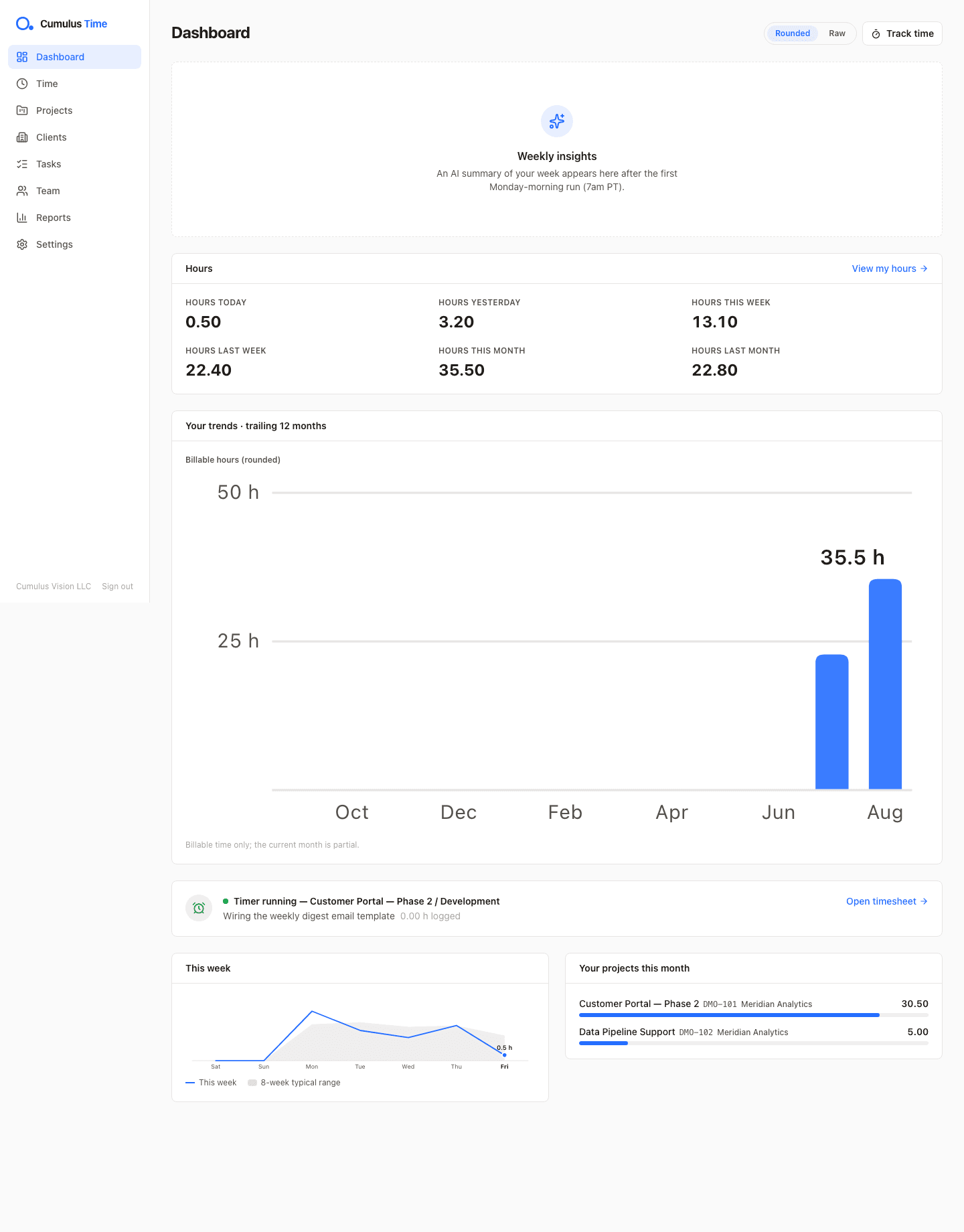
Cumulus Vision is a small consulting firm. Harvest ran our billing life: the team logged time in it daily, invoices went out of it monthly, payments came back through it, and everything synced to Xero. Six seats, $59 a month. It was good software at an easy price, and we recommended it to clients.
Some context first: Harvest was acquired by Bending Spoons in 2025, and started rolling out new plans. Here’s the mechanism, as shown inside our account. At renewal, paid accounts move automatically to the Enterprise plan with “Unlimited usage billing.” The seats are almost a decoy — six seats at $17.50 is $105 a month, less than some legacy plans. The new part is a separate usage layer: a flat $599 a month, or a “Flex” alternative that bills you on tiers of how many projects, tasks, and clients you have — and how much you invoice.
For our account: $105 in seats + $599 usage = $704 a month, about 12× our old bill. We ran the Flex math too — for a consulting firm of our shape it lands within sight of the same number, and it prices your growth: invoice more, owe more. There’s also a Harvest fee added to your clients’ online payments on Flex, waived if you pay the $599.
One more thing worth saying plainly. Harvest’s public pricing calculator shows “Your total price” computed from seats alone, with a footnote that additional usage “is billed based on what you use, so you’re never overpaying.” The usage amounts themselves — including the $599 — appear nowhere public that we could find; they’re shown only inside your account. So the calculator quoted us a “total price” of $105 while our actual renewal was $704, and we can only tell you what our account was shown. Whether every account sees the same numbers, we have no way to know.
To be fair: they offered us a generous discount on the first year if we committed. But a discount on year one doesn’t change year two — the destination price was the price, and everyone involved knew it. We decided we’d rather solve it once than negotiate it annually.
Call it $8,400 a year for a timesheet and an invoice generator.
We’d idly thought about replacing Harvest for years, the way you think about re-tiling a bathroom that works fine. At $59 a month it was never worth the weekend. The renewal notice recategorized the project instantly: $8,400 a year isn’t a subscription, it’s a budget line — and budget lines get engineering attention.
Judging by the number of people on Reddit announcing their own replacements or switching to alternative apps, we weren’t alone in that math. Honestly? For anyone with software development experience, this space is not that challenging. Time tracking and invoicing is a well-understood problem. That’s exactly why the new pricing felt wrong.
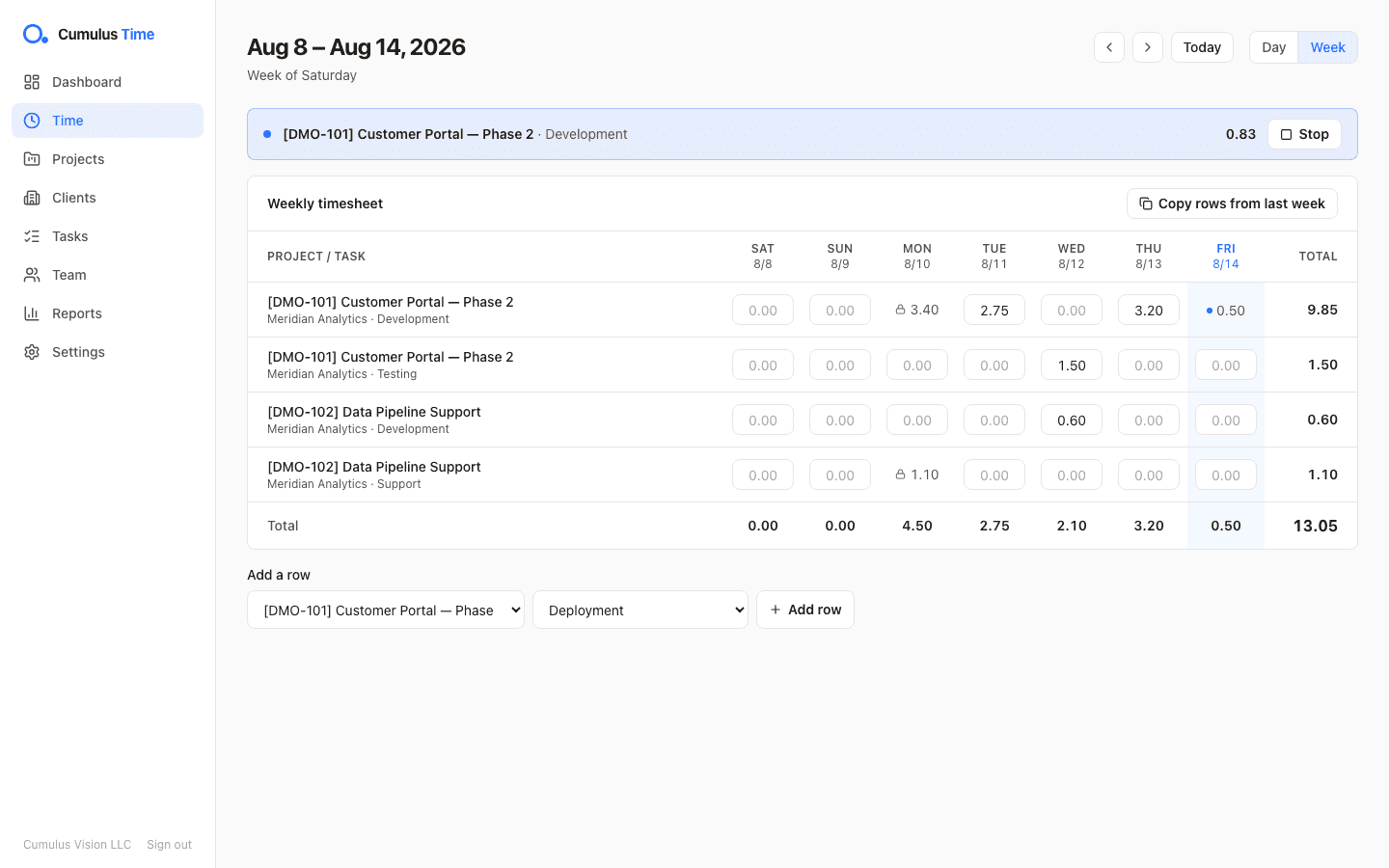
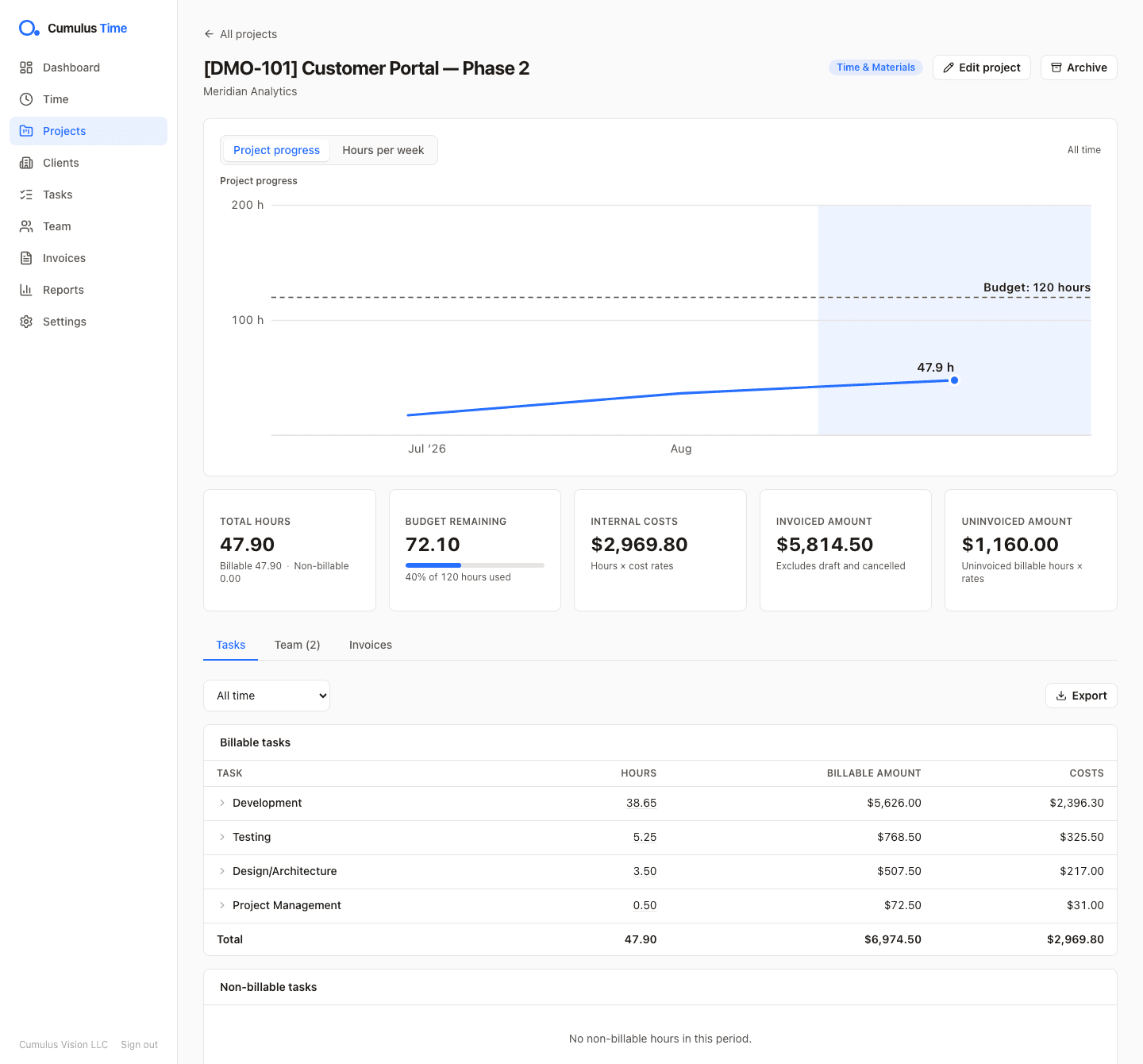
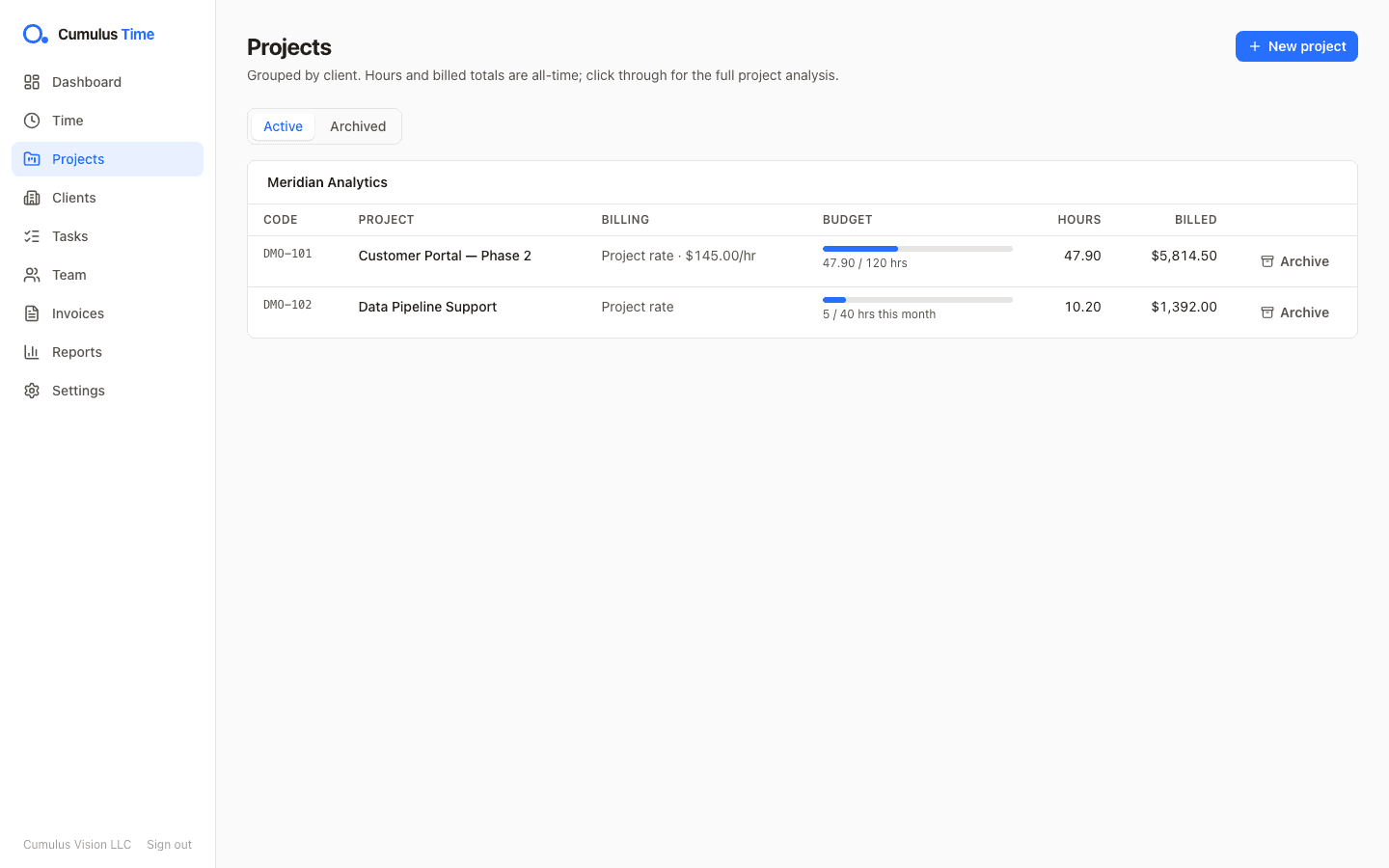
Working with AI coding agents (Claude Code, running teams of agents in parallel), we went from empty repo to production in two days: time tracking with timers, the exact invoice generator we were used to — same detail levels, same 6-minute rounding, same numbering sequence — ACH payments embedded on client invoice pages, and the full Xero sync working end to end, with a few improvements over the integration we’d left behind.
All 13 years of history came along: every entry, every invoice, every payment, verified row for row against the originals. The team stopped opening Harvest within the first day; the whole team was fully cut over in under a week.
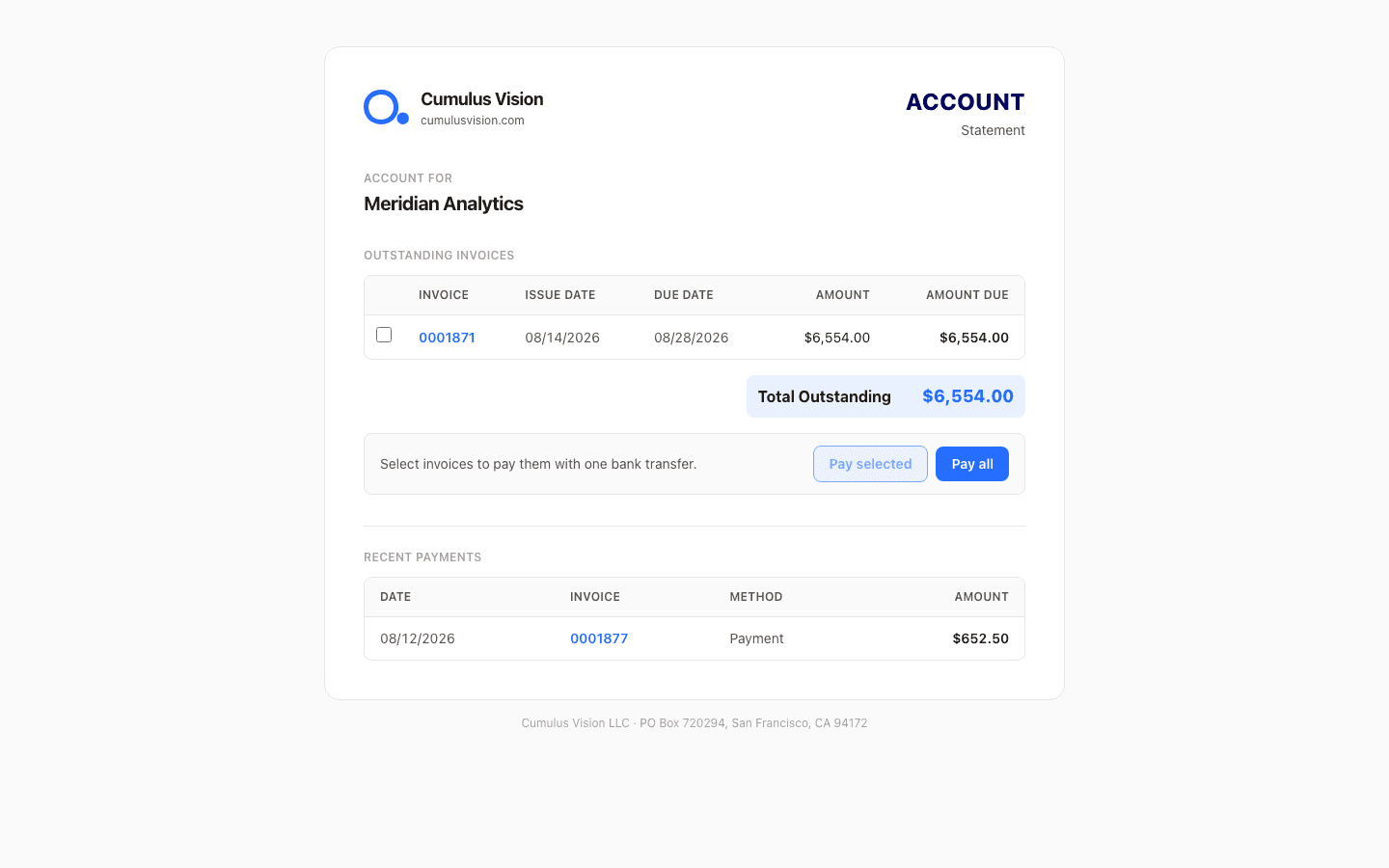
Because once it’s yours, the wishlist stops being a wishlist. In the same two days we added the things we’d always wanted and could never have asked a vendor for: clients can pay several invoices in one bank transfer; there’s a proper API — just a feature, but one that fits how we work, since teammates deep in a Claude Code session can log their time without switching windows; permissions are enforced in the database itself, so billing rates and costs are structurally invisible to anyone not cleared to see them; and every Monday the app writes each of us an AI analysis of where the week’s hours and dollars actually went.
| Line item | Before (renewal offer) | After |
|---|---|---|
| Time tracking & invoicing 6 Enterprise seats + Unlimited usage | $105 + $599 = $704/mo | $0 — we own it |
| Hosting & database | — | ~$45/mo |
| Xero sync connection | included | $5/mo |
| Transactional email | included | $0 (free tier) |
| ACH payment processing | ~$5 flat per invoice | ~$5 flat per invoice (same processor, direct) |
| Software subtotal | ~$8,400/yr | ~$600/yr standalone |
Our actual number is lower still: under $5 a month. We already host other apps on the same Vercel and Supabase accounts, so this one rode along on plans we were paying for anyway — the only genuinely new line item is the $5 Xero connection. The ~$50/month column is the honest standalone estimate if you’re starting from zero.
The build itself: two days of AI-agent development, one person supervising. We build software with these tools every day, so our marginal cost was mostly attention. Your mileage will vary — that’s an honest caveat, not false modesty.
Nothing here is exotic, and that’s the point — a replacement you own has to be maintainable on a Tuesday afternoon between client calls:
Total infrastructure: about $50 a month standalone — under $5 in our case, since it shares accounts with apps we already host.
Maybe not. If the new price is noise in your budget, renew and move on. If an off-the-shelf alternative fits how you work, migrate. Software you own is software you maintain — we went in knowing that, with the skills in-house.
But the real story isn’t one vendor’s pricing. It’s that the build-vs-buy math for internal tools has quietly inverted, and most companies haven’t re-run it. We’re not building a product to sell — this is our internal app, built for exactly how we work. The point is that that option now exists for any team with development experience, at a cost that used to be unthinkable.
The part we didn’t expect to feel so good: the roadmap is ours now. We never used Harvest’s forecasting product — it didn’t fit how a professional-services firm like ours plans work — so we simply didn’t have forecasting. Next month we’ll build one shaped exactly like our business. No feature requests, no waiting for someone else’s dev team, no “planned for next quarter.” We make the app fit us, instead of fitting ourselves to the app.
We’re not the only ones. When the new pricing landed, builders all over the forums started replacing Harvest with their own tools — some for their team, some as products. We’re collecting their stories here, in their own words.
Built as a product you can use
by LFG
Provides a weekly time entry sheet, sends invoices on demand, AR aging.
Built your own? Tell us about it — a short writeup and a couple of screenshots is all it takes.
Stories are contributors’ own accounts, lightly edited for length. A listing isn’t an endorsement — evaluate anything here the way you’d evaluate any software.
We’re deciding whether to open-source it. It’s not a product and won’t become one — but if enough people want a self-hosted starting point, we’ll clean it up and publish it. One email when we decide, in either direction. No newsletter.
We’re Cumulus Vision, a Salesforce development company that also builds custom apps and AI workflows. This app was built by AI agents, supervised by one person, in two days — and this page exists because we figured our renewal email wasn’t the only one out there.